
Whole fig preserves have a particular Southern beauty. The fruit stays recognizable, suspended in glossy syrup, ready for a hot biscuit, pound cake, or a spoonful beside sharp cheese. When fig trees are loaded in Alabama, this is one of the best ways to capture the season.
Preserves are also a canning project, which means safety comes before improvisation. The recipe below follows the tested National Center for Home Food Preservation method. Keep quantities, jar size, headspace, and processing directions intact. Flavor experiments belong at serving time, not inside an untested canning jar.
Use Good Figs, Not Overripe Figs
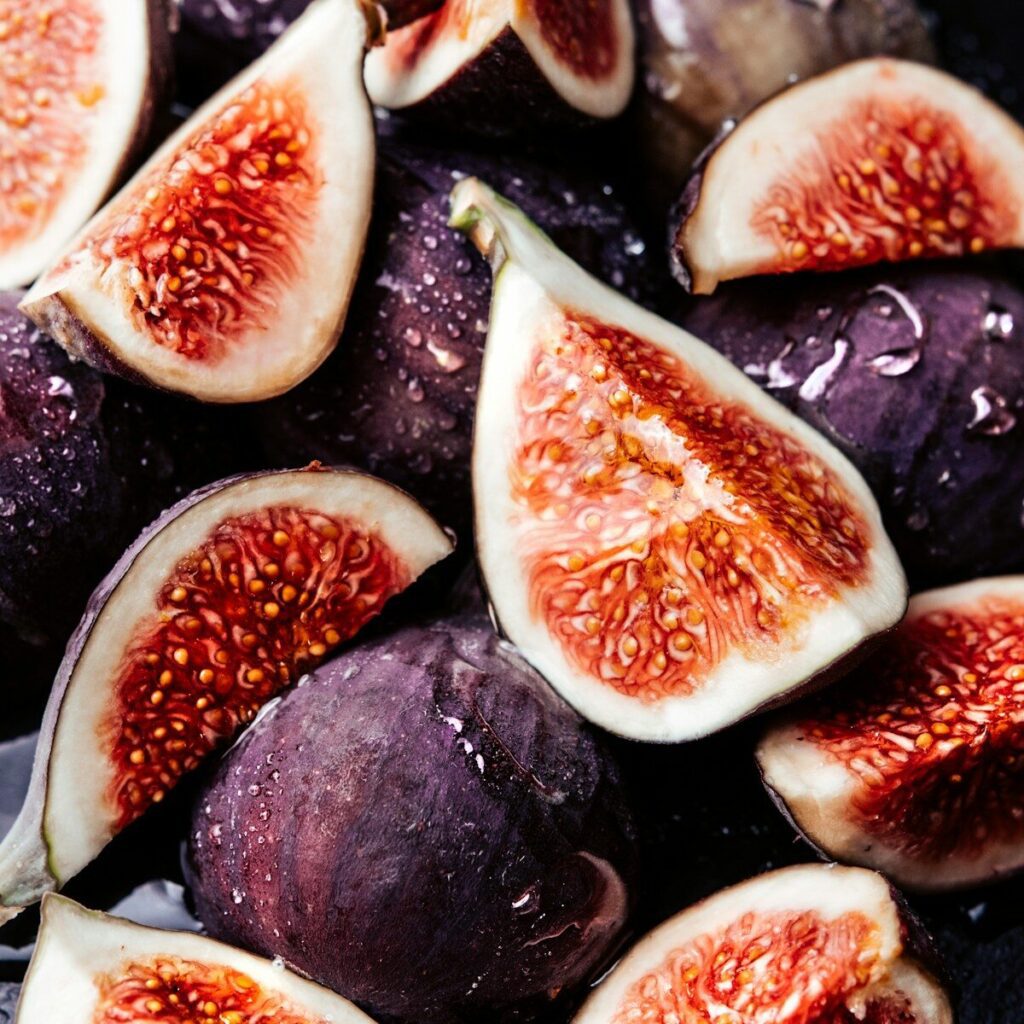
Choose sound, mature figs that hold their shape. They should be ripe enough for good flavor but not so soft that they collapse when heated. Sort out fruit with mold, fermentation, insect damage, or broken skin that is beginning to spoil.
Handle figs gently. Wash them under cool running water and drain. Leave the small stems attached or trim them neatly according to preference, taking care not to tear the fruit.
Group figs of similar size so they cook evenly and become translucent without the smallest fruit breaking apart.
Tested Ingredient List
- 3 quarts whole figs
- 3 quarts boiling water for the initial treatment
- 4 cups granulated sugar
- 1½ quarts water for the syrup
- 2 lemons, thinly sliced, optional
The expected yield is about 10 half-pint jars, though fruit size and syrup reduction can shift the exact number. Prepare an extra jar so you are not caught short.
Do not reduce the sugar in this traditional preserve or increase the fruit. The tested balance and process are designed for this product. For a lower-sugar spread, use a separate tested recipe developed specifically for reduced sugar.
Prepare the Canner and Jars
Use a boiling-water canner or a deep pot with a rack and a lid. Jars must be covered by at least 1 to 2 inches of boiling water during processing. Inspect half-pint or pint canning jars for chips and cracks, and use new flat lids with clean screw bands.
The tested table gives a five-minute process at elevations up to 1,000 feet, which requires sterile jars before filling. An approved alternative is to begin with clean hot jars and process for 10 minutes at that elevation. Longer times apply above 1,000 feet. Check your elevation and choose the correct process before you begin.
Keep jars hot so hot preserves do not enter cold glass. Warm lids according to the manufacturer’s current directions; modern lids generally should not be boiled.
Give the Figs Their Initial Hot-Water Treatment
Place the prepared figs in a heat-safe container and pour 3 quarts of boiling water over them. Let them stand for 15 minutes. Drain and discard that liquid, then rinse the figs in cold water and drain again.
This step is part of the tested method. Do not reuse the soaking liquid as syrup or shorten the standing time to save a few minutes.
Make the Syrup
Combine 4 cups sugar with 1½ quarts water in a wide, heavy pot. Add the thin lemon slices when using them. Bring the mixture to a rapid boil and continue boiling for 10 minutes.
Skim away foam, then remove and discard the lemon slices. The lemon is optional in this preserve recipe and is used during syrup preparation rather than packed into the jars.
Keep the syrup boiling as the figs are added. A broad pot gives fruit room to move without being crushed under its own weight.
Cook the Figs Until Translucent
Add figs carefully to the boiling syrup, a few at a time, allowing the boil to recover between additions. Continue cooking rapidly until the fruit becomes translucent.
Stir as little as possible and use a gentle lifting motion when necessary. Whole figs tear easily after heating. Once translucent, lift the figs into a shallow pan.
Continue boiling the syrup until it reaches a thickness similar to honey. Pour the hot syrup over the figs, cool the pan, cover it, and refrigerate for 6 to 8 hours. This resting period helps the fruit absorb syrup while holding its shape.
Reheat and Fill the Jars
Return the figs and syrup to a clean preserving pot and heat them to a full boil. Work with one hot jar at a time. Pack whole figs gently, then ladle hot syrup over them, leaving ¼ inch of headspace.
Remove trapped bubbles with a nonmetallic utensil and adjust the headspace if needed. Wipe each rim with a clean damp paper towel so no syrup interferes with the seal. Center the lid and tighten the band fingertip-tight.
Place each filled jar on the canner rack promptly. Do not let packed jars cool on the counter while the rest of the batch is filled.
Process for Your Elevation
Once all jars are in the canner, make sure boiling water covers them adequately. Put on the lid and begin timing only when the water returns to a vigorous boil.
- At 0 to 1,000 feet: process half-pints or pints for 5 minutes when jars were presterilized, or use the approved 10-minute process with clean hot jars.
- At 1,001 to 6,000 feet: process for 10 minutes.
- Above 6,000 feet: process for 15 minutes.
Keep the water boiling for the entire time. If boiling stops, bring it back to a full boil and restart the timing.
Cool, Check, and Store
At the end of processing, turn off the heat, remove the canner lid away from your face, and let jars rest briefly before lifting them straight up. Place them on a towel with space between jars and leave them undisturbed for 12 to 24 hours.
Remove screw bands and check the seals. A sealed lid is concave and does not flex when pressed. Refrigerate any jar that failed to seal and use it promptly, or reprocess within 24 hours using a new lid and the complete tested process if product quality remains acceptable.
Label sealed jars with the product and date. Store them without bands in a cool, dark, dry place. Before serving, discard any jar that is unsealed, leaking, bulging, spurting, moldy, or otherwise suspicious. Never taste food to decide whether a questionable jar is safe.
Serving Fig Preserves
The traditional answer is a split biscuit with butter, but do not stop there. Spoon a fig over plain yogurt, pair it with goat cheese, glaze a pork roast with a little syrup, or chop the fruit into a pan sauce. If you enjoy tested Southern preserving recipes, our muscadine jelly method is another good seasonal project.
Keep serving ideas separate from the canning formula. Once the jar is safely opened, spices, citrus zest, toasted nuts, or a splash of vinegar can be added to the portion on the table.
A Jar That Still Tastes Like the Tree
Fig jam is smooth and useful, but whole preserves keep the character of the fruit. The two-stage method and refrigerated rest are worth the pace. Start with sound figs, follow the tested quantities, process for your elevation, and let every jar cool undisturbed. When winter comes, those translucent figs bring an Alabama August morning right back to the table.