
Turnips grow best in Alabama during cool weather. They are fast, easy to grow, and useful because you can eat both the roots and the greens.
For most Alabama gardens, plant turnips in late summer through fall for the best crop. You can also plant them in late winter or early spring. Avoid the hottest part of summer because heat and insect pressure can make the crop harder to manage.
When to Plant Turnips in Alabama
Fall is usually the easiest season for turnips in Alabama. Plant seed as summer heat starts to ease. In many areas, this means late August through October. A spring crop can also work if you plant early enough for the roots to mature before hot weather arrives.
Turnips fit well in an Alabama fall vegetable garden. They grow quickly, and light frost can improve the flavor of the greens and roots.
Soil and Sun
Choose a spot with full sun or at least six hours of direct light each day. Turnips prefer loose, well-drained soil. Hard or rocky soil can cause small or misshapen roots.
A soil pH near 6.0 to 6.5 works well. If you are not sure about your soil, use an Alabama garden soil test before adding lime or fertilizer. Mix compost into poor soil, but avoid heavy amounts of fresh manure.
How to Plant Turnip Seed
Sow turnip seed about one-half inch deep. Keep rows about 12 to 18 inches apart. Once seedlings come up, thin them so root varieties have about 3 to 4 inches between plants.
If you mainly want greens, plants can stay a little closer together. For large roots, give them more space. Water after planting and keep the seedbed evenly moist until the seedlings are established.
Watering and Feeding
Turnips grow best with steady moisture. Dry soil can slow growth and make roots tougher. Water deeply when the top layer of soil begins to dry, but do not leave the ground soggy.
A light layer of mulch can help hold moisture and reduce weeds. Follow soil-test advice for fertilizer. Too much nitrogen can produce lots of leaves but smaller roots.
Common Turnip Pests
Flea beetles, caterpillars, aphids, and other insects may feed on turnip leaves. Check plants often, especially while they are young. Small holes are often the first sign of trouble.
Keep weeds down and rotate crops when possible. Do not plant turnips in the same spot every season. Good spacing and airflow can also help reduce disease problems.
When to Harvest Turnips
You can harvest turnip greens as soon as the leaves are large enough to use. Take a few outer leaves at a time if you want the roots to keep growing.
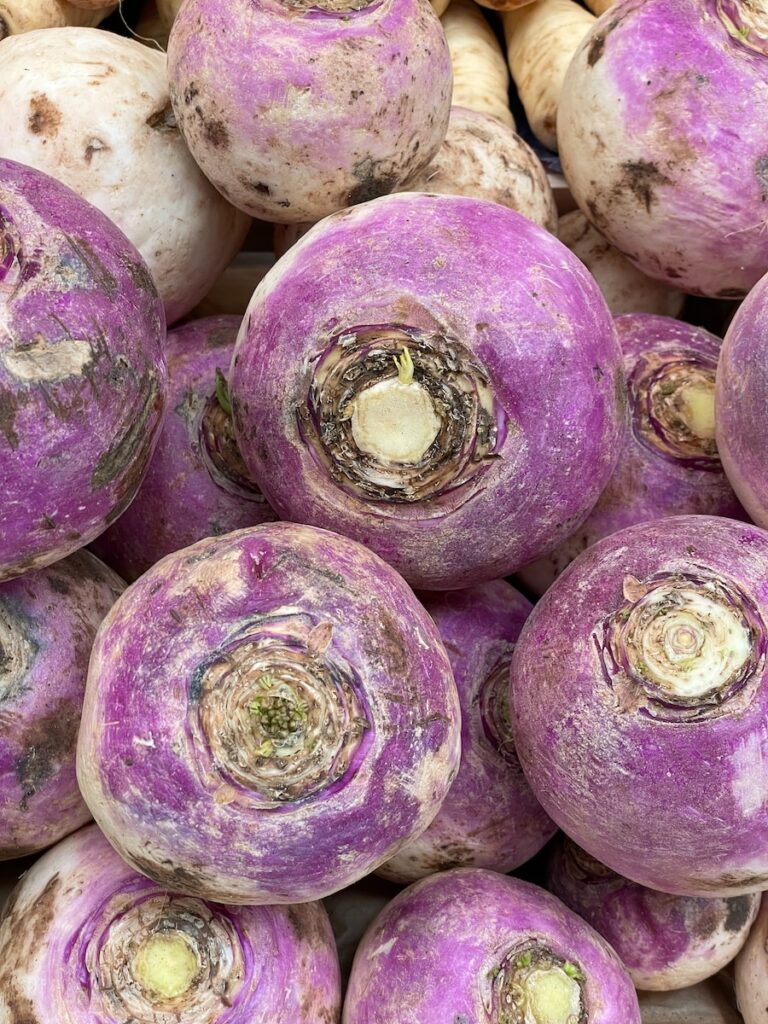
Roots are usually best when they are about 2 to 3 inches wide. Smaller roots are often sweeter and more tender. Pull them before they become old, woody, or strongly flavored.
Storing Turnips
Cut the greens from the roots before storage. Keep the roots in the refrigerator in a bag or container that helps prevent moisture loss. Use damaged roots first.
Turnips are a simple cool-season crop for Alabama gardens. With good soil, steady water, and the right planting time, you can harvest both fresh greens and crisp roots from a small space. For more seasonal basics, see our Alabama home gardening guide.